
Light gray square, with a dark gray border on the sides.

Blog

Circle Cardiovascular Imaging Expands cvi42 Platform with Advanced Vascular CT Capabilities

March 18, 2026

New solution brings advanced vascular analysis into the cvi42 cardiovascular imaging ecosystem. 

Highlights 


  • Circle Cardiovascular Imaging (Circle CVI) has expanded its cvi42 platform to include advanced Vascular CT analysis, integrating Astute Imaging’s AI-driven vascular analysis technology. 
  • This enhancement enables comprehensive cardiovascular workflows, allowing clinicians to perform cardiac, vascular, and structural heart analysis within a single, unified platform. 
  • This integration supports greater efficiency and collaboration across cardiology, radiology, and vascular surgery teams, advancing the use of quantitative, AI-enabled imaging for diagnosis, procedural planning, and post-treatment management 


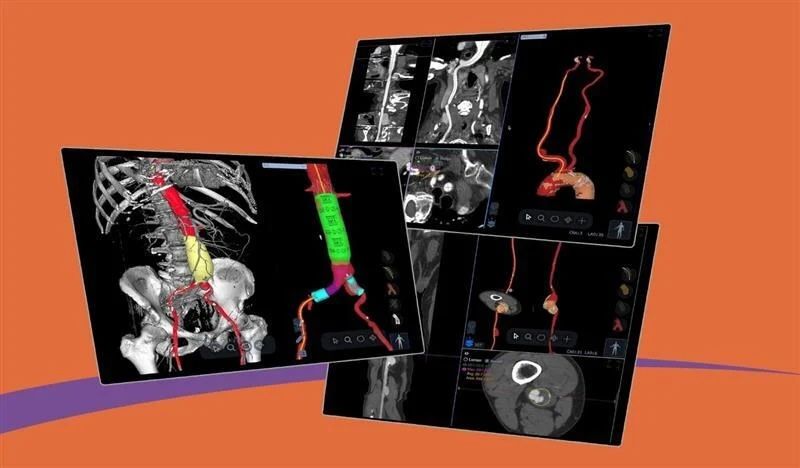
Calgary, AB — March 18, 2026 — Circle Cardiovascular Imaging (Circle CVI) today announced the expansion of its cvi42 cardiovascular imaging platform to include advanced Vascular CT analysis, further extending the platform’s capabilities across cardiovascular imaging workflows. The new solution is enabled through a collaboration with Astute Imaging, whose AI-driven vascular analysis technology has been integrated into the cvi42 ecosystem. 


The addition of Vascular CT capabilities allows clinicians to analyze complex vascular anatomy for diagnosis, endovascular procedure planning, and post-treatment surveillance, all within the same platform used for cardiac imaging and structural heart planning. 


Advancing Quantitative Cardiovascular Imaging 


As healthcare systems increasingly adopt quantitative imaging and AI-enabled workflows, clinicians are seeking integrated platforms that can support the full continuum of cardiovascular care — from diagnosis to procedural planning and long-term disease management. 


The new Vascular CT capabilities extend the scope of cvi42 beyond cardiac imaging, enabling automated vascular analysis within the same environment trusted by cardiovascular teams worldwide. 


The technology powering these capabilities was developed by Astute Imaging, whose advanced algorithms support automated segmentation, quantification, and visualization of vascular structures. 


“Fragmented imaging workflows can slow collaboration and decision making between cardiovascular teams,” said Dr. Kevin Steel, Chief Medical Officer, Circle CVI. “By bringing vascular CT analysis into the cvi42 ecosystem, clinicians can work from the same platform across cardiac and vascular cases, helping improve efficiency and coordination of care.” 


Cardiac and vascular analysis within a unified workflow helps multidisciplinary cardiovascular teams collaborate more effectively across cardiology, radiology, and vascular surgery. 


ABOUT CIRCLE CARDIOVASCULAR IMAGING 


Circle Cardiovascular Imaging Inc. (Circle CVI) is a Canadian-based company founded in 2007 with a mission to develop innovative software solutions that enhance cardiovascular and cerebrovascular imaging analysis and ultimately improve patient care. Circle’s flagship platform, cvi42, delivers best-in-class image reading and reporting tools for quantitative and qualitative assessment of cardiac MR, cardiac CT, vascular CT, and neuro CT


At the core of Circle’s work is a relentless commitment to empowering healthcare providers with advanced, intuitive tools that lead to better healthcare outcomes. This passion for innovation, rooted in both medicine and technology, drives Circle’s global impact and fuels a culture of excellence. 


Today, millions of medical imaging exams each year, across 1,700+ hospitals in over 90 countries, are interpreted using Circle’s cvi42 platform. 


For more information, please visit www.circlecvi.com or contact: marketing@circlecvi.com 


About Astute Imaging 


Astute Imaging Inc. is a U.S.-based company founded in 2022 with a mission to become a best-in-class provider of AI-enabled vascular imaging and care management software for healthcare providers and MedTech companies. Astute Imaging delivers a fully automated, AI-enabled workflow supporting diagnostics, surgical planning, and longitudinal patient follow-up. The platform covers all major vascular anatomies, including the aorta, carotid arteries, and peripheral vasculature. 


In addition, Astute Imaging provides AI-enabled virtual device simulation, allowing surgeons to visualize and automatically identify the most appropriate device for a patient’s anatomy, enabling highly personalized procedural planning and care management. Astute Imaging’s technology is also used by medical device companies for regulatory and research applications, including core lab services and R&D support. 


For media inquiries, please contact: marketing@astuteimaging.com 

Logo for Circle Cardiovascular Imaging, featuring a stylized green spiral and the company name in grey text.
March 23, 2026
Clinical Wins and Daily Practice Introduction A single cardiovascular imaging platform like Circle’s cvi 42 changes daily work for cardiologists and radiologists from “tool juggling” to focused clinical practice. But it also asks for effort and carries real, though manageable, risks. Seeing this change from your perspective, the people interpreting images and shaping programs, makes it easier to decide whether adopting a unified platform is worthwhile. What clinicians gain from one platform Less friction, more clinical time With one platform across MR, CT, structural heart, and EP: You spend less time deciding which tool to open and more time deciding what the data means. One login, one interface, and one workflow logic govern all modalities. Measurements, annotations, and reports behave consistently, so you aren’t constantly switching “UI languages.” AI and automation (e.g., contours, plaque, TAVR workflows) are applied the same way regardless of scanner or modality. This creates cognitive ease, a predictable environment where your brain can focus on nuance and complex decisionmaking instead of navigation. Better consistency and confidence A single platform builds one mental model for cardiac data: acquisition, processing, quantification, and reporting. Standardized protocols and templates reduce variability between readers and sites. Quantification tools remain the same across cases, deepening expertise in one toolkit. Shared measurement formats simplify heartteam discussions and QA reviews. This strengthens diagnostic confidence and supports defensible, consistent decisions. Stronger positioning for advanced and reimbursed work With MR, CT, structural heart, and electrophysiology workflows unified: Advanced workflows (perfusion, strain, plaque) feel like natural extensions of current practice. New reimbursed features (like AIbased plaque quantification) integrate smoothly into routine CCTA reads. Research and innovation benefit from standardized, unified data exports. This positions programs to stay clinically advanced and financially competitive. Less burnout, more sustainable practice Fragmented tools mean more clicks, context shifts, and afterhours work. Integrating platforms can: Reduce duplicate actions via shared worklists and structured reporting. Lower cognitive load through interface consistency. Simplify coverage and crosstraining, so expertise isn’t isolated to one person. Behavioral science shows that reducing friction and restoring control is as important as cutting workload—key factors for preventing burnout. Stay tuned for Part 4: The Effort, Risks, and Why It’s Worth It. While the clinical and operational gains are clear, shifting to a single platform isn't "zero effort". In our final installment, we’ll have a candid discussion about the implementation valley—addressing common concerns like short-term slowdowns and vendor dependence—and show how these risks are mitigated to create a safer, fairer, and more transparent environment for everyone.
Patient in a hospital gown lies on a CT scanner bed, nurse smiles and comforts him. White and gray machine, neutral setting.
March 17, 2026
For years, the Coronary Artery Calcium (CAC) score has been the gold standard for a quick, non-invasive look at heart disease risk. It’s a vital tool that has helped millions of patients understand if they have "hardening of the arteries." But while a calcium score tells us that plaque is present, it only tells part of the story. As medical technology evolves, we are moving beyond simply identifying the presence of calcium to a much more detailed understanding of heart disease. With the advent of AI-enabled coronary plaque analysis, such as cvi42 | Plaque , patients and physicians now have access to a deeper level of insight that was previously impossible to achieve through standard screening alone. What is AI-Enabled Coronary Plaque Analysis? While a traditional calcium score measures the amount of mineralized (hard) plaque in your coronary arteries, AI-enabled plaque analysis looks at the "soft" or non-calcified plaque as well.
Triple threat: illustrations showing anatomical heart, heart with clock, and inflamed heart with viruses.
March 12, 2026
The Clinical Challenge & the cvi42 Solution Executive Summary Cardiovascular disease remains the leading cause of global mortality, yet diagnostic workflows remain fragmented. Traditionally, clinicians have been forced to navigate disconnected systems to assess a patient’s heart: one for anatomy (CCTA), another for function (CMR/Strain), and a third for vascular inflammation (PCAT/Plaque). This "siloed" approach creates diagnostic friction, increases costs, and delays life-saving interventions.
March 10, 2026
Clinical and Financial Wins that Scale From Single Platform to Strategic Advantage Clinicians, department heads, and executives each win differently from consolidation. Circle’s cvi 42 turns integration into tangible impact across MR, CT, structural heart, and electrophysiology programs. Why Circle’s platform stands apart For clinicians: Market-leading MR and CT tools in one workspace, with AI-driven workflows for function, tissue, plaque, and procedural planning—faster, reproducible reads and intuitive tools for edge cases. For department heads: Consistent multimodality workflows, research-grade quantification, and data exports supporting registries and AI projects. For finance leaders: Shared investment across MR and CT service lines, volumealigned pricing, and new reimbursable procedures like AIenabled coronary plaque analysis. 

Subscribe to our newsletter

 Don’t miss future articles or publications.